How to Keep Up With These Changing Times
The Case for Active Learning

I recently attended a training session for Copilot at Microsoft, specifically for healthcare organizations. During this session, the speakers provided a high-level overview of how large language models work, how Copilot can be integrated into various Microsoft applications, and an introduction to writing more effective prompts.
In this workshop, we carried out a fun activity where we had to write a prompt and further refine it within Copilot chat, with the end goal of creating an image that matched as closely as possible with the image the presenter provided us with (looked similar to this)

I am currently taking French classes, which will be an ongoing learning process to move towards mastery of the language. In my French class, when we don’t know the word we are trying to describe in French, we aren’t supposed to switch to English, but instead use our detailed knowledge of English vocabulary to describe the word until a French word emerges.
For example, if I am trying to describe a person as happy in French, but I didn’t know the word “heureux” I would use my knowledge and understanding of the word in English to describe this state of being in French. For example, he/she was smiling, they were content, they liked so and so.
This reminded me of the strong critical thinking skills and experience that will be needed when writing prompts within these generative AI tools (ChatGPT, Deepseek, Copilot, Gemini, etc…) to be able to generate a useful output.
For example, it might be helpful to write a prompt in one of these AI tools: “Design an implementation plan, listing common barriers and facilitators to the clinical workflow, around improving the number of patients who provide feedback on their care, in the renal department”.
These AI tools might output a generic plan, but often, specifically in the healthcare field, what works for one healthcare organization or hospital will not work for another due to a variety of factors, such as patient population, the capabilities of the Electronic Health Record, location, level of care, etc…
This is why having clinical experience or working with front-line stakeholders continues to be critical when implementing quality improvement projects in a clinical setting, because this is not information the AI tool would have access to. In addition, site visits to the healthcare organization and observing the clinical workflow in real-time are key to implementing quality improvement projects that have a chance of being effective.
I think that as these Gen AI tools become more and more commonplace, the importance of actively learning and understanding concepts, especially edge cases, will be a key skill to develop. The process of learning might become a passive practice because people might think all they need to do is ask a Gen AI tool to provide them with a high-level summary of whatever concept it is that they want to learn.
However, this makes it difficult to retain information; most problems have edge cases that you find out by actively participating in learning. This comes from running into issues that need to be further investigated, looking up multiple different sources or talking with others when you get stuck on a problem. This process is important because it teaches you meta-learning, how to learn, in a way that works best for you. For me, working on a project where I have to use the concepts I learned to build something from scratch, although frustrating, is the best way for me to retain information.
If you are looking to develop or refine your data skills in Power BI and SQL by building a Hospital KPI Dashboard from scratch, you should check out my course
I am currently reading the book Ultralearning: Master Hard Skills, Outsmart the Competition, and Accelerate Your Career
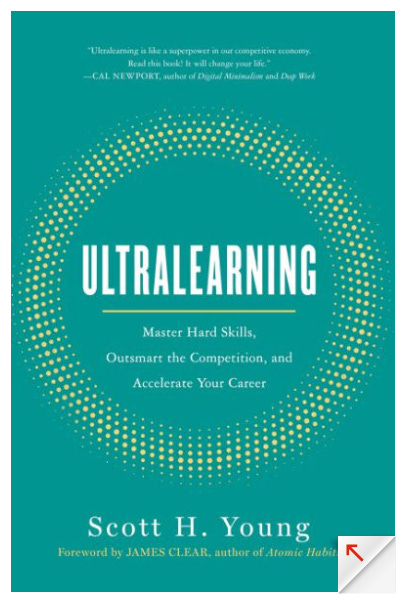
The book outlines some techniques for how to learn difficult problems quickly and efficiently. This book profiles both ordinary and extraordinary individuals who have learned a specific skill at a mastery level. As the level of information we have access to becomes greater and greater, as a society, we will have to figure out how to use this as a tool and not as a crutch.
By the way, learning doesn’t have to be a solo activity! In next month’s newsletter, I will be previewing an exciting initiative where this community can come together as a group to learn together ☺️
Resources
In Case You Missed It! I went live on my YouTube channel to provide tips on how to structure your resume to get your first role in health informatics. You can watch the replay here
I also had the opportunity to interview Dr. Onye Nnorom, who is a distinguished physician, advocate, public speaker and leader in the field of public health and equity. We talked about the importance of mentorship and diversity within the healthcare field. You can watch the interview here
Job Postings:
Business System Analyst
Senior Data Scientist
Project Manager
CDC Public Health Informatics Fellowship Program (Deadline November 2025)
Joy Corner
Celebrating 5 years of the Health Analytic Insights YouTube channel! Thanks for all the engaging comments and emails 🙂